

by Prof. Dr.sc. Plamen K.GEORGIEV, “The Philosophical Club”
The transition to democracy and market economy in Eastern Europe are only 2 major politically articulated and to certain extend successfully promoted aims of modern civilization. Their antinomies turn more complex than we have expected however. Visible and invisible (Huntington) clashes of religions and cultures, habits and prejudices, shifting identities, or even persistent mentalities, immune to significant and desired change, may only illustrate a most diverse and contradictive field of cross cultural studies on this side.
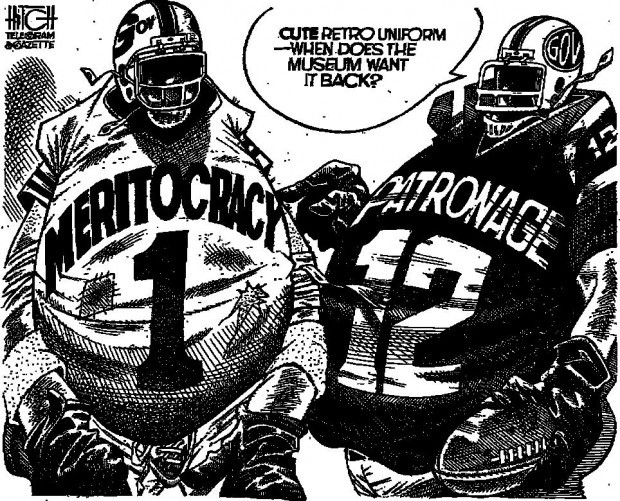
Most social facts of this type are not only system but phenomenon bound and could be facilitated only by significant, but also desired societal change. In this way the process of transition in diverse cultural settings and regions in SE Europe can be grasped as dramatic ( and in most cases break down of old systems of patronage ( the party controlled state, nomenclature networks, different forms of loyalties – from vassal to sultanist (Weber) dependencies, openly totalitarian to more sophisticated forms of coercive oppression.
Real democracies seem the only rational frameworks of substantial societal and civilization change. They might get a “second breath”, not so much from self sufficent national elites, and/or political parties, less even through centrally steered remote strategies. A democratically sensitive cluster of political cultures that has already shaped, need to propell this new creative energy in the right direction. The latter is multi- vector oriented, but is to be European centred. And this in a new way.
Is political culture still learned?
The basic premise of Almond´s and Verba theory of Civic culture seems overridden by the immense political ( chaotic) changes that occurred after the fall of the Berlin wall (P.K. Georgiev, 2007). The malfunctioning of the “hard-“ and “software” democratic increase in number of “new democracies” (some most generously called so) , are not so much a product of some implicit contradictive nature of their own, as I have argued in previous contributions to a rather vague discourse on this side. Less seem they influenced by their “fragile” and uncertain civic cultures.
As we could witness, they seem hampered, by certain hazardous structural changes in the traditional and modern forms of patronage as domains of a propelled process of proliferation of façade democracies, in a wider context. While societies situated nearer to advanced democracies (Central Europe) seemed to perform better, as related to a more efficient functioning of their democracies and market economies, the “periphery”, or “enclave” cultural settings on this side of the Balkans, rapidly lost their initial democratic momentum.
There is less doubt that this reality has to be changed in a systematic and persistent way, but much more through intervening pattern, in terms of the demand for a wider and deeper new European integrity. The latter is less likely to be achieved, as I believe.This could hardly happen, by shier social engineering, derived from the experience of the near past. Innovative approaches, including the shaping of rational systems of patronage in countries in transition in SE Europe seems in high demand.
The Balkans offers a perfect case in this respect. Whole segments of those societies overriding and regionally boundaries are networked into what some consider (informal linkages), compensating the lack of capacity of number of national governments to offer reasonably acceptable social output after more than two decades of “teasing transition(s)”. They idea of upgrading those cultural and rumbled political structures on European democratic pillars, seems even more desperate ( as in the case of Bosnia-Herzegovina, Macedonia, Kosovo and what is left of ex-Yugoslavia).
While some countries (as Bulgaria and Romania) have in a way stepped over the threshold of minimal change in terms of European democratic and social order, relevant efforts to control organized crime, immigration, or illegal economic activity (shadow economy) – others as Albania, Bosnja-Herzegovina, Macedonia etc. may be facing another “lag” related to their aspired European integrity.
The question of an eventual Turkish accession ( in some provisional forms at least) into EC, sharpens the situation as it raises waves of nationalism and xenophobia in bordering countries. According to some sources significant shares of the privatised economic sector in Bulgaria, for example, are already under the control of Turkish companies. Russian capital has also infiltrated in forms of “shadow investment” ( straw men) mainly at the Black sea coast area and/or along the track of gas pipes projects from Bourgas to Alexandropulus ( Greece) or Vljora (Albania).
All this threatens to turn the Balkans into a set of less touchable “free zones” (domains of global corruptive patronage) in a variety of forms. This endangers both the security and homogeneity of Europe as complex cultural and political entity and has to be grasped in a most rational and resolute legal control.
Meta structures of power emerging
A set of “meta structures” has emerged in the era of transition in South Europe, as we could witness. Generally speaking, those structures are not bound to the notion of the state, or even the republic, as “chief executive” and carrier of patrimonial tradition. They hang less even to a still living totalitarian tradition of governance and its authoritative ruling regimes, which made best use of the initial inertia of the past to launch capitalism “enforced from above”. This happened in a radically changed global context (marked by the crisis from 2008).
The emerged meta structures have to be rationalized as respond to a new paradigm, which has shifted from “radical” to “negotiable transition”. Those structures feed on their own sources of power. They generate new fields of influence and dominance. They invent and abolish “rules of the game” in a most sensational and opportunist way. Their voluntarism, inspired by some pervert theory of chaos, turns whole segments of societies and even cultural regions into “dark holes”.
The latter are out of reach of market obsessed media and perplexed forms of public control. This influences both the “in” and the “output” of the system. It raises immense problems for the population in those countries in transition, moreover for the democratic world.
There is less doubt that social science has to go beyond the static frameworks of “stands of the matter” indexes, and/or a variety of assessment frameworks which are most often an expensive instrument of sensational media persuasion, or less flexible social policy performance (EC and national level). Grasping the internal dynamics of corruptive patterns of patronage in countries in transition, might be a turning point. The “De- balkanisation of the Balkans “is already a shaping strategy in this respect. It may achieve even faster the long delayed “step by step” goals of its integrity. This could be achieved by new types of patronage (overriding local elite) to steer changing identities on this side in a new European societal context.
Political cultures in most countries of South Eastern Europe, however, seem not to comply with the aims of a “democracy for the few”. They are less even inspired by the idea of some polyarchy (Dahl), steered by egocentric national “elites”, obsessed by the ultimate free market forces. Liberal values enjoy a diminishing chance to grass-root, less even flourish in the environment of “competitive scarcity”, which has traditionally shaped on this side of Europe. As vague as civic cultures in those countries appear to be, however, their capacity to democratically challenge the coercive power of some collective authoritarism re animated.
As far as money is not to be considered as a substitute of democratic politics, the discontent among the citizens in most Balkan countries is growing. This is a painful shift to a new civic consciousness and democratic awareness. The problem is that most of the cultures on this side inherit some traditional antagonism related. They “kill” decent in their own naïve and enthusiastic way. They are not bound to the values of individual worthiness. Their “social solidarity” is a hybrid of the old “structured collectivism” and most volatile communitarism that emerged in marginal segments of the transition. The latter gives birth to populism of a new cloning which may turn quasi- democratic “waves” into destructive tsunamis. The appeals for the “strong hand” are more than symptomatic. Quasi-democracy can generate only authoritarian regimes, even though they look most sophisticated and European friendly.
Abolishing quasi-democracies
What we define here as “quasi-democracies” (most relevant to the Balkans) refers to specific patterns of voting behavior, election procedures, and pseudo-democratic institutional functioning, that have shaped in the years of transition. This has generated a new critical mass of corporate bound and illegally controlled public domains of power. The latter have deviated societies on this side from basic requisites of liberal democracy. They have also shaped a culture of “repressive tolerance” (Fetcher), based on voluntarism of a most irrational (asocial) and self-destructive kind.
We could further on describe the phenomena by the following 2 major premises: a) Quasi-democracies (as quasi-particles) can be regarded as admixtures of negatively charged electrons (patterns of individual behaviour) and positively charged holes (social domains); b) An equal mix yields a quasi-particle (specific behaviour) that is electrically (politically) neutral – yet it still carries spin one-half, just like an ordinary electron (political behaviour).
This theoretical (methodologically innovative) framework of defining (detecting) typical (traditional) and emerging new corruptive patterns of patronage in number of quasi-democracies on the Balkans seems of specific interest to us in a growing demand for transparency of power structures of less known nature and predictability.
This culture feeds on dualistic (relativist) value systems, which are irrelevant to the “embedded” norms of a democracy. Its “quasi-operators” perform in different fields and under different conditions. Though they behave in many respects like ordinary “quasi-particles” (in terms of modern physics), they have highly unusual properties.
To brief here only but a few:
“Qasi-democracies perform in the frameworks of parliamentary systems, this occurs however only expressively;
- They act through own networks of influence, which are not (necessarily) institutionally bound;
- They inspire the emerging of NGOs, or even steer “grass roots” movements in their own public support;
- They are hardly to be identified by conventional variables of representative democracy, as they feed on direct forms of influence.
- They lack the “mass” of proper politics, as generator of significant and desired social change;
- Still their “fields” control societal change and even propel it into desired directions (media and PR techniques);
- Quasi-democracies relate to public life in most “twisted” patterns (beyond mere asymmetry).
- In their deeper sociological sense (“M.Weber) they spring from cognitive structures, which are irrelevant to the democratic mind.
Bulgaria and Romania (as last catchers of EU membership at this stage) might well be considered as “nested domains” of such networks and structures filling the old-new gap of some secondary actualized idea of buffering zone between East and West; In so far Macedonia, Albania, Bosnia and Herzegovina, Monte Negro are regarded as less successful mergers of future lucky European integrity, Romania and Bulgaria might well act as a hub of European coordinated law enforcement measures to diminish corruptive patterns (and schemes) as partially unveiled (but still less visible) new patronages of power emerging in a post-communist context.
April 25, 2016
Sofia
Prof. Dr.sc.Plamen K. Georgiev graduated sociology at Humboldt University, Berlin. He is guest lecturer of the University of Heidelberg and Freiburg, Fellow of DAAD and DFG; Member of the Union of Bulgarian Scientists. Author of “The Bulgarian Political Culture“, V&Runipress, Göttingen, 2007; „Sociology. Basic Concepts and Modern Theories“ (Sofia, 2006); „Corruptive Patterns of Patronage in SE Europe“, 2008, Springer VS, “ Self Orientalization in SE Europe“, Springer VS, 2012 and others.
.