

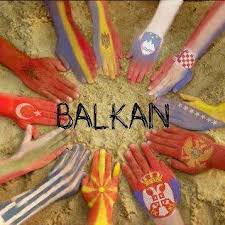
The fall of the Berlin wall recarnated by new fences of Macedonia and Bulgaria to desperately revived traditional buffering zone , between desecularized Oxident and most uncertain Orient, looks as desolate as never before.

By Prof. Dr.sc. Plamen K. GEORGIEV
The Philsophical club, BG
Heildeberg alumni
The Western Balkans stumbled in a most boring and prolonged EU procedure of accession, slide on the EU generosity of leased souverignity. Which make local elites as a Bulgarian sociologist defined legitime up to Kalotino. * Border check pass control of Bulgaria to Serbia.
NATO seems bound to rather unrealistic strategies of presence in the region, concentrated in a sophisticated Med Balkans strategy *water- sea presence that may turn the Black sea into fluid of geopolitical turmoils ending into sequential national catastrophes *1912, 1913, 1918, 1944.
While Russia relies on over 1000 years of cultural interweaving with what is still defined as its Orthodox sphere of influence – the West (not represented by its most realistic visions of the peripheral European nexus) is bidding on rising entropy of risks. The imperial investments of Russia from 1878 up to Stalin’s era of sharing the Balkans as designed in national contours on a cigarette box – in Yalta – survived some how the Malta deal of Gorbi and Busch.
This provisional divison as many admit has much failed the EU process of accession moreover convincing integrity. Europe of 2 and even 3 speeds peeps behind the corner of friendly dimplomatic gatherings, usually ending with general agreements and less pragmatic results.
Menwhile elites on this side – regarding post war traumatized Belgrade, a nationalist spilled Skopje earnest petty Balkan countries pro- Brussels aspirations, vigilant Orban’s Budapest, not to mention self – self teasing Bucharest – may have shaped a cluster of new gravity and potential cleavage, as way out of the new challenges and uncertainty offered by Great powers.
The latter usually have determined the geopolitical configuration of the region.
One point to add to the present perplexities is that The Balkans, seem tempted in their own way by the experience of Grexit and the forthcoming Brexit *. No matter of its outcome* the inevitable reconfiguration of Old Europe prompts to desperate search of alternatives.
The Eurasian one – as offered by Russia and its closer satellites of the Asian periphery may look less culturally relevant, but in a way a safety belt to sinking segments of the transitional elites. The need of finance and even military backing, as source of locally and EU disputed legitimacy may be a driving force to some new euro skepticism on this side.
The idea of returning to a new old niche of a Balkan federal dream may look as extravagant and unrealistic; still it is living in some heads around.
The latter deprived by Communist International, but suffered in its own way beyond borders of ethnic and quasi nationalist divisions may turn a real challenge as EU is in rather desperate search of new EU configuration.
Turkey seems less likely to survive on its Ottoman old notion of wider global presence. It is more likely that the 90 millions young nation will return to its pan Turk idea as admixture of revived totalitarism in a way recarnating Attaturk’s visions. But stay as Western as it may swap for the role of chef of the Balkans opened to the Middle East.
No matter the outcome of British vote, the Balkans – once labeled ” villans at both sides of the Danube river “( Churchill), look less open to Brussels and the big powers. Step by step a new sense of Balkan identity – denied by think tanks from Regensburg, or even Moscow admit the need of some lose paternalism for the region as guarantee of piece and stability.
As disputable as civic culture grass rooting among oligarchs Balkan realities, the middle class on this side is still reluctantly motivated to reforms and westernization . But not so much in the bureaucratic, “cash and carry” selective approach of Brussels.
The weight of what some still recognize as symbolic capital – has still value and is even used to rediscover own national experience of how to deal with hindernesses to freedom.
One good step towards the idea of a new Balkan federation may be the return to clusters of non-allies bound countries – an experience Yosef Broz Tito, successfully exploited even in the most sinister years of communism.
George Dimitroff’s (Leipzig 1933 hero of the Comintern) model of Macedonian – Bulgarian unity, or bipolar junction of relative common ethnic communities looks less realistic.
The failure of Rambujeu * the Yugoslav war, moreover the missed chance of cantonization of regions of Rest Yugoslavia , have clearly shown that a split ballot applied to ethic and religious quasi – constitutional settings on this side has no future.
The Balkans have a deeply rooted culture of mental similarities and experience of coping with othernesss. This may may turn to be the key for the modernization of the region moreover the stability of distressed Europe.
“Let the people go” ,as the old refrain says. It may come cheaper and even go smoother.
16.06. 2016
Sofia
Prof. Dr.sc.Plamen K. Georgiev graduated sociology at Humboldt University, Berlin. He is guest lecturer of the University of Heidelberg and Freiburg, Fellow of DAAD ; Member of the Union of Bulgarian Scientists. Author of “The Bulgarian Political Culture“, V&Runipress, Göttingen, 2007; „Corruptive Patterns of Patronage in SE Europe“, 2008, Springer VS, “ Self Orientalization in SE Europe“, Springer VS, 2012 and others. Adjunct professor at Center for Risk Assessment and Security Studies, New Bulgarian university, Sofia and columnist for independent European media

![[:bg]Илиян[:][:en]Ilian[:] [:bg]Василев[:][:en]Vassilev[:]](http://bulgariaanalytica.org/wp-content/uploads/userphoto/52.jpg)
