

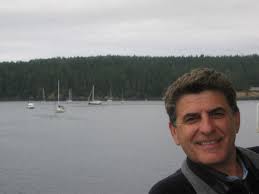
Author: Nikola ZLATANOV
Нашият сайт постепенно се интернационализира и привлича интереса на нов тип автори. Хора, изявени на „стика“ на едно ново познание и неговото приложение в един нов свят без граници. За съжаление малко промислен, неовладян от „управление“, власт, че и нови йерархии.
Питали ли сте се защо светът никога не е управляван от философи? А технологиите? Те могат да бъдат средство за човешки напредък, но и унищожителни, в ръцете на профани, дилетанти и рафинирани зли сили. И тук идва ново просветление, нов морален ангажимент. На учения, изобретателя, евриста и първопроходеца. И няма да е пресилено, ако кажем, че той е реалният гарант и стопанин на един утрешен свят , който настъпва днес. А знанието – „имплицитно“ на една радикална технологична промяна – става по силно от традиционните „производителни сили“. Защото и отношенията и менталностите, променят своя характер, съдържание, обхват. Че и капацитет за революционна промяна.
Не се стряскайте – революцията не е по улиците отдавна. Това са само нейни отзвуци, рефлексии от едно време, което принадлежи на миналото. Революциите са в лабораториите, в главите на недоспали, но възторжени в енергията и мечтите си за един по-справедлив и технологично развит свят. Има такива хора – и тук ви представяме такъв един млад български учен, успял на попрището на авангардните технологии и тяхното приложение в ред отрасли. А, че той бил българин, бе, ще рече и нашият Тома Неверни /имаме и такива сред читателите/.
Ще отговорим: Да, да и Джон Атанасов беше и си остана българин. Това не му „попречи“ да създаде прототипа на първия компютър, нали? Както и много други способни и талантливи нашенци. Но защо там, в другия свят, а не тук при нас в България? Е тук всеки има какво да каже…
Доще ден, драги читаелю и България да си събере интелекталните „вересии“. Сиреч да си посрещне хората, пръснали се по света, но все с една тръпка „под лъжичката“. Да сторят и за своя народ нещо по-добро, по достойно, така както правят това за света. И той им се отплаща далеч не само с бонуси и други облаги. Но и с престижа, репутацията на хора, които работят за прогреса на човечеството. А не за егоцентрични, още по малко фикс идеи. Какво по достойно от това?
Остава какво? Остава и ние да се научим да ценим и взискателно да подбираме своите първопроходци. Тези, които да следваме. Защото те са елитът, какъвто ни трябва, за да ни изведе от кризата. А на манкьори и ерзац-лидери с вас се нагледахме.
*******
The pre-technological period, in which all other animal species remain today was a non-rational period of the early prehistoric man.
The emergence of technology, made possible by the development of the rational faculty, paved the way for the first stage: the tool. A tool provides a mechanical advantage in accomplishing a physical task, arrow, plow, or hammer that augments physical labor to more efficiently achieve this objective.
Later animal-powered tools such as the plow and the horse, increased the productivity of food production about tenfold over the technology of the hunter-gatherers. Tools allow one to do things impossible to accomplish with one’s body alone, such as seeing minute visual detail with a microscope, manipulating heavy objects with a pulley and cart or carrying volumes of water in a bucket.
The second technological stage was the creation of the machine. A machine is a tool that substitutes the element of human physical effort, and requires only to control its function. Machines became widespread with the industrial revolution. Examples of this include cars, trains, computers and lights. Machines allow humans to tremendously exceed the limitations of their bodies. Putting a machine on the farm, a tractor, increased food productivity at least tenfold over the technology of the plow and the horse.
The third, and final stage of technological evolution is the automation. The automation is a machine that removes the element of human control with an automatic algorithm. Examples of machines that exhibit this characteristic are digital watches, automatic telephone switches, pacemakers and computer programs.
It’s important to understand that the three stages outline the introduction of the fundamental types of technology, and so all three continue to be widely used today. A spear, a plow, a pen and an optical microscope are all examples of tools.
The process of technological evolution culminates with the ability to achieve all the material values technologically possible and desirable by mental effort.
An economic implication of the above idea is that intellectual labor will become increasingly more important relative to physical labor. Contracts and agreements around information will become increasingly more common at the marketplace. Expansion and creation of new kinds of institutes that works with information such as for example universities, book stores, patent-trading companies, etc. is considered an indication that a civilization is in technological evolution.
Interestingly, this highlights the importance underlining the debate over intellectual property in conjunction with decentralized distribution systems such as today’s internet. Where the price of information distribution is going towards zero with ever more efficient tools to distribute information is being invented.
Growing amounts of information being distributed to an increasingly larger customer base as times goes by. With growing disintermediation in said markets and growing concerns over the protection of intellectual property rights it is not clear what form markets for information will take with the evolution of the information age.
The future today is not what I imagined to be long ago. Ever since people learned how to turn sand into gold, and the semiconductor industry and digital technology took over the world, people started to experience the negative effects of it. Here are just 25 of them but they could be far more:
Isolation, Lack of Social Skills, Obesity, Depression, Poor Sleep Habits, Pollution, Increased Bullying, Lack of Privacy, Higher Level of Deceit, Warped Sense of Reality, Stress, Blackberry/iPhone Thumb, Lack of Social Boundaries, Lack of Sexual Boundaries, Lack of Social Bonds, Constant Distraction, Neck and Head Pain, Shortened Attention Span, Addiction, Lack of Empathy, More Violence, Higher Energy Consumption, Developmental Issues in Children, Neurosis, Loss of Hearing and Eyesight.
The accent of man will eventually create a radical new economic system that will emerge from collapse of capitalism thanks to the enormous innovation in technology. The current economic system has become so successful at lowering the costs of production that it has created the very conditions for the destruction of the traditional vertically integrated corporation.
No one in their wildest imagination, including economists and business people, ever imagined the possibility of a technology revolution so extreme in its productivity that it could actually reduce marginal costs to near zero, making products nearly free, abundant and absolutely no longer subject to market forces.
With many manufacturing companies surviving only on razor thin margins, they will buckle under competition from small operators with virtually no fixed costs.
From the ashes of the current economic system will emerge a radical new model powered by the extraordinary pace of innovation in energy, communication and transport.
This is the first new economic system since the advent of capitalism and socialism in the early 19th century so it’s a remarkable historical event and it’s going to transform our way of life fundamentally over the coming years. It already is, we just haven’t framed it.
Some sectors, such as music and media, have already been disrupted as a result of the internet’s ability to let individuals and small groups compete with the major established players. Meanwhile, the mainstreaming of 3D printing and tech advances in logistics – such as the installation of billions of intelligent sensors across supply chains – means this phenomenon is now spreading from the virtual to the physical world.
The creation of a new economic system, will help alleviate key sustainability challenges, such as climate change and resource scarcity, and take pressure off the natural world. That’s because it will need only a minimum amount of energy, materials, labor and capital.
Few people are aware of the scale of danger the human race is facing, particularly the growing levels of precipitation in the atmosphere, which is leading to extreme weather. Ecosystems can’t catch up with the shift in the planet’s water cycle and we’re in the sixth extinction pattern. We could lose 70% of our species by the end of this century and may be imperiling our ability to survive on this planet.
Every economy in history has relied for its success on the three pillars of communication, energy and transportation, but what makes this age unique is that we are seeing them converge to create a super internet.
While the radical changes in communication are already well known, a revolution in transport is just around the corner. You will have near zero marginal cost electricity with the probability of printed out cars within 10 or 15 years. Add to this GPS guidance and driverless vehicles and you will see the marginal costs of transport on this automated logistics internet falling pretty sharply.
Particularly interested is the upheaval currently rippling through the energy sector and points to the millions of small and medium sized enterprises, homeowners and neighborhoods already producing their own green electricity.
The momentum will only gather pace as the price of renewable technology plummets. The cost of harvesting energy will one day be as cheap as buying a phone.
You can create your own green electricity and then go up on the emerging energy internet and program your apps to share your surpluses across that energy internet. You can also use all the big data across that value chain to see how the energy is flowing. That’s not theoretical. It’s just starting.
Large companies across all sectors to follow suit and, rather than resist change, use their impressive scale and organizational capabilities to help aggregate emerging networks. If the old industries can monopolies the pipes, the structure, and destroy network neutrality, then you have global monopolies and Big Brother for sure.
But if we are able to maintain network neutrality, it would mean that any consumer who turns prosumer, with their mobile apps, already can begin to feed into this expanded internet of things that is developing. People think this is off on the horizon but if I had said in 1989, before the web came, that 25 years later we would have democratized communication and 40% of the human race would be sending information goods of all kinds to each other, they would have said that could not happen.
Is not the ability to produce goods so cheaply will just lead to more strain on the planet’s limited resources as a growing global population go on a buying frenzy? There is a paradox operating here, which is that over consumption results from our fear of scarcity, so will go away when we know we can have what we want.
Millennials are already seeing through the false notion that the more we accumulate, the more we are autonomous and free. It seems they are more interested in developing networks and joining the sharing economy than in consumption for consumption’s sake.
There is an institution in our life that we all rely on every day that provides all sorts of goods and services that have nothing to do with profit or government entitlement and without it we couldn’t live and that is the social commons. There is millions of organizations that provide healthcare, education, ministering to the poor, culture, arts, sports, recreation, and it goes on and on.
This is not considered by economists because it creates social capital which is essential to all three of the internets, but does not create market capital. But as a revenue producer, it is huge and what is interesting is it’s growing faster than the GDP in the private market system.
We may not live long enough to see this hope for a better future materialize, but the collaborative commons offers the only viable way forward to deal with the sustainability challenges faced by humanity.
We need a new potential platform to get us to where we need to go. I don’t know if it is in time, but if there is an alternative plan I have no idea what it could be. What I do know is that staying with a vertically integrated system – based on large corporations with fossil fuels, nuclear power and centralized telecommunications, alongside growing unemployment, a narrowing of GDP and technologies that are moribund – is not the answer.
Author’s profile:
* Mr. Nikola Zlatanov spent over 20 years working in the Capital Semiconductor Equipment Industry. His work at Gasonics, Novellus, Lam and KLA-Tencor involved progressing electrical engineering and management roles in disruptive technologies. Nikola received his Undergraduate degree in Electrical Engineering and Computer Systems from Technical University, Sofia, Bulgaria and completed a Graduate Program in Engineering Management at Santa Clara University. He is currently consulting for Fortune 500 companies as well as Start Up ventures in Silicon Valley, California.